
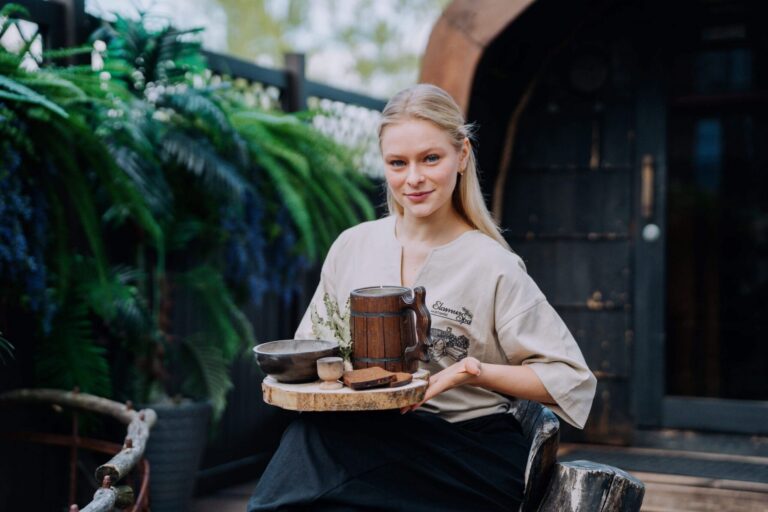
VIDEOS AND PHOTOS: Herbal Cup brings the power of nature into the sauna
A well-guided sauna ritual can be an experience in which bathers find, alongside the usual sauna experience, peace of mind, deep relaxation…
Read more →8 min read

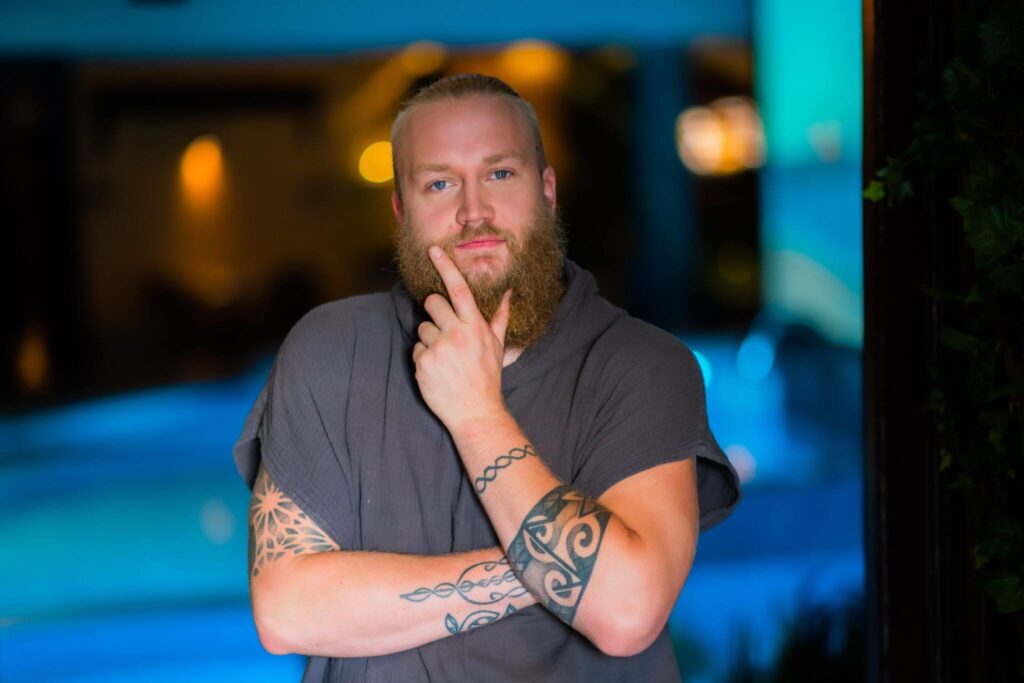
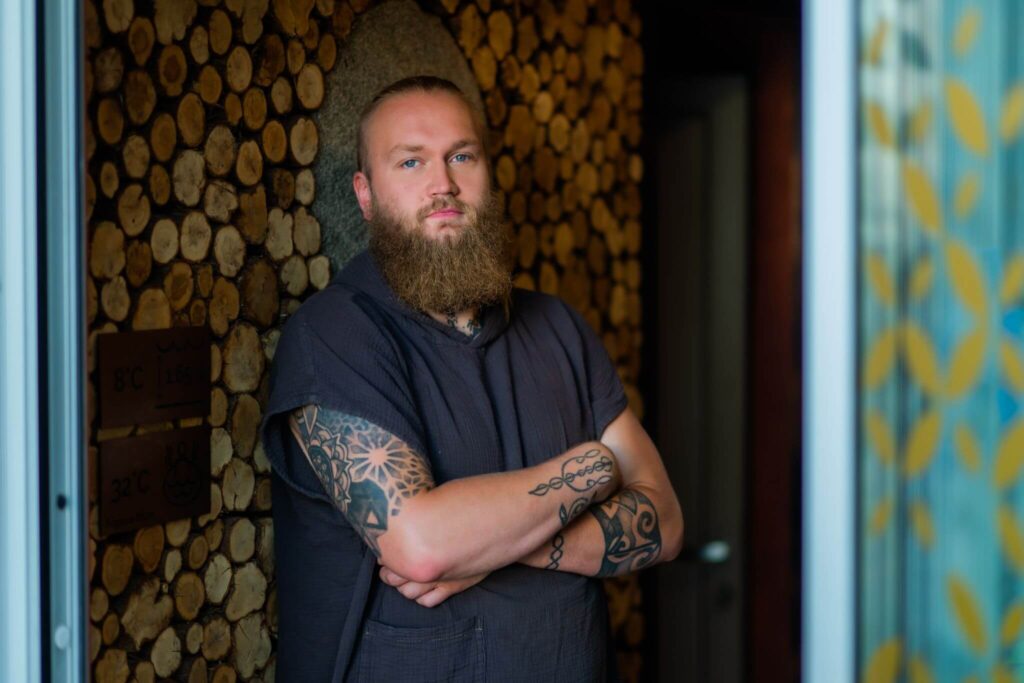
Elamus SPA sauna masters Johanna Jakobson and Karl-Peeter Kangur, who went to Germany in September to represent Estonia at the competitions of Aufguss, one of the organisations uniting the world’s best spa and sauna centres, both admit that as children they could not have dreamed of the work of a sauna master. Johanna loves horses and hoped to become a riding coach. Karl-Peeter likewise recalls that as a child he could not have dreamed of a sauna master’s work. Back then he rather wanted to become a police officer. Like his father. Or else a hairdresser or a chef. Since Karl-Peeter was a sporty boy, a professional career also hovered in his dreams. So how did they become sauna masters, and which sauna and steam rituals do they recommend?

As a child Karl-Peeter went to the sauna gladly, but a longer break came into that activity after he burned himself against the stove. That lasted until a basketball camp, where he rediscovered his love of the sauna. He found his way to the profession of sauna keeper through an acquaintance who invited him to work at the spa. It suited him well, because he very much likes heating the sauna and winter swimming. Today, however, the man has become so attached to the profession of sauna master that he cannot see himself in any other profession.
Karl-Peeter’s goal is to experience, to learn and perhaps in future even to teach. Travelling around the world, the profession of sauna master is valued, and every country has its own culture and customs which, once learned, enrich Estonians’ sauna visits too – just as Jamie Oliver travels the world gathering cooking tricks, Karl-Peeter gathers sauna knowledge. Of course he dreams of his own little forest house in Estonia’s primeval mystical forest, where in future he can make a pleasant sauna and sauna rituals.

As a child Johanna had a sauna at her grandparents’ place, from which she has bright memories of whisking and of sitting in the sauna’s front room. She explains that she has always loved warmth and likes the sauna’s tropical environment very much.
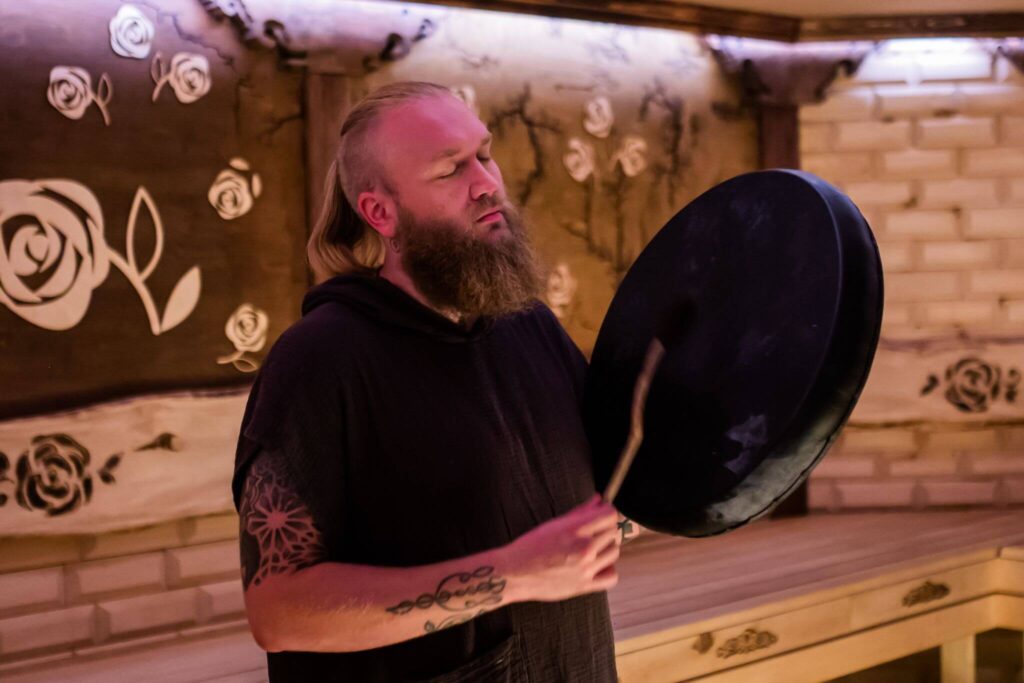
Of course, back then she knew nothing about sauna rituals. You sat in the sauna and whisked as usual. With a sauna master’s work, however, a new and exciting world opened up: what sauna rituals and exciting tricks can be done with towels to create experiences for bathers. Every sauna master has their own particularities, and so everyone’s rituals are different too. The basics are the same, but each master adds details of their own. Karl-Peeter, for example, sings during the sound ritual. Gentle-natured Johanna, on the other hand, plays the instruments rather more quietly, so the rituals are more relaxing. “At the same time I do the steam ritual hotter than the others,” she says.

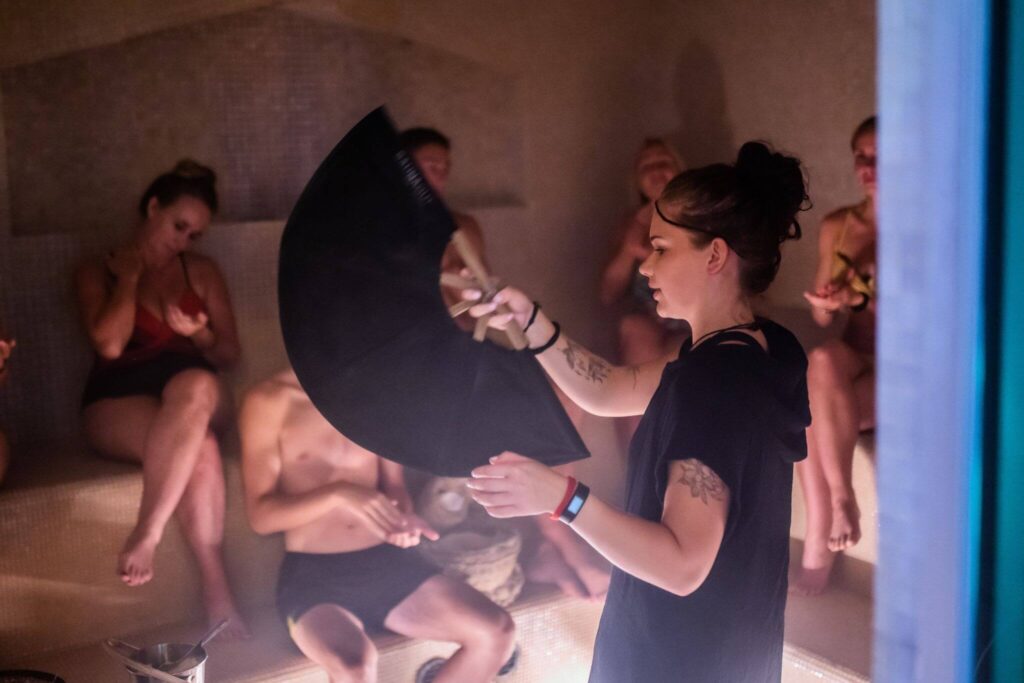
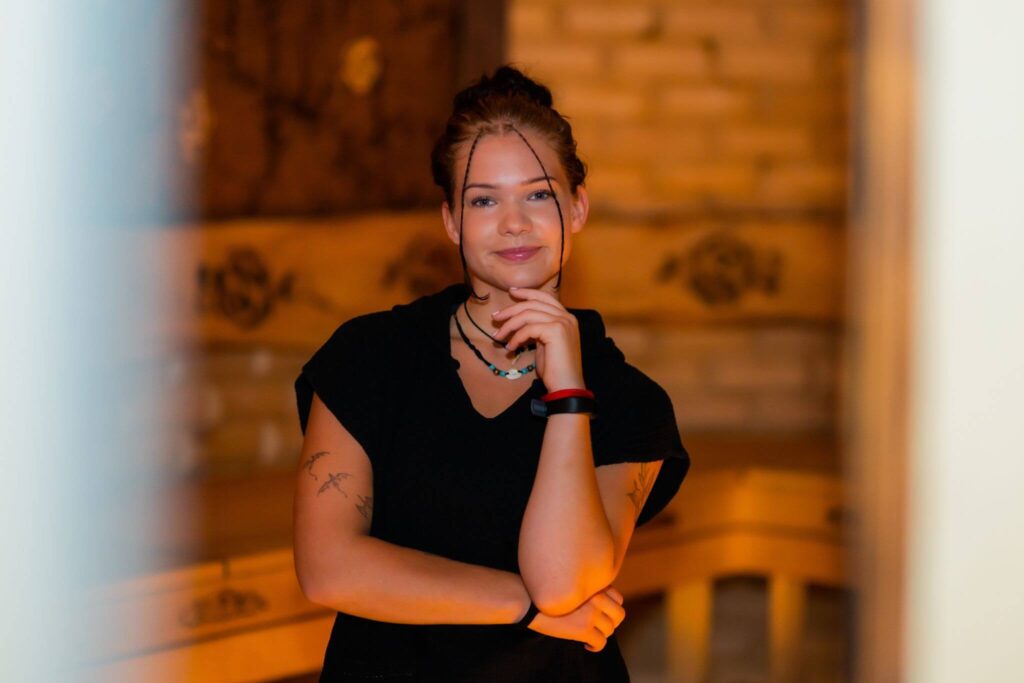
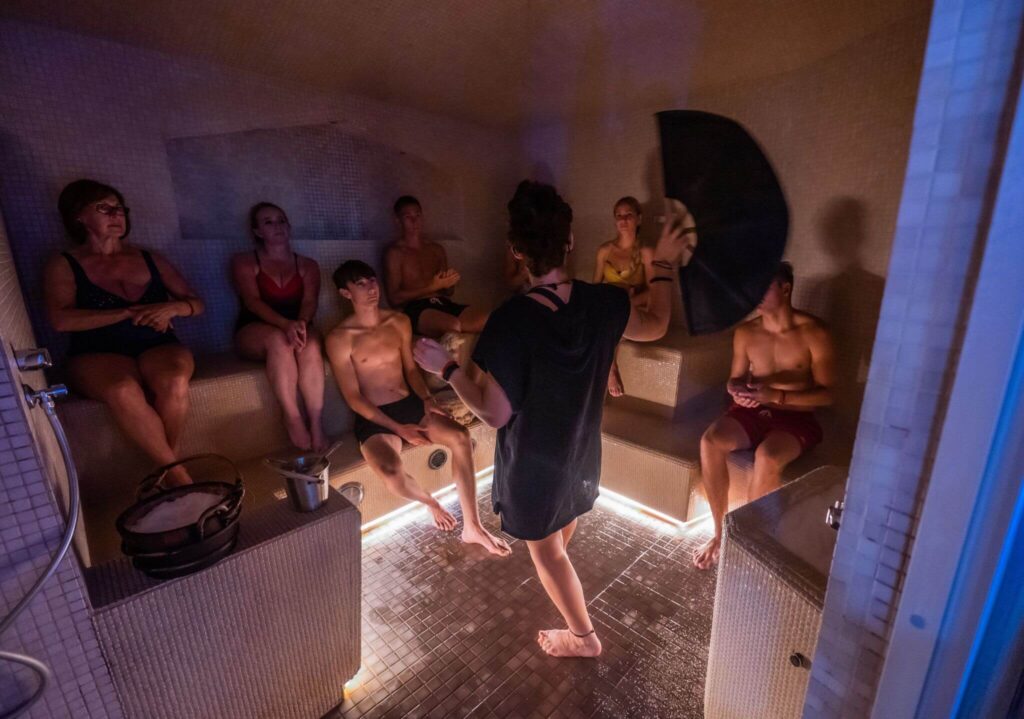
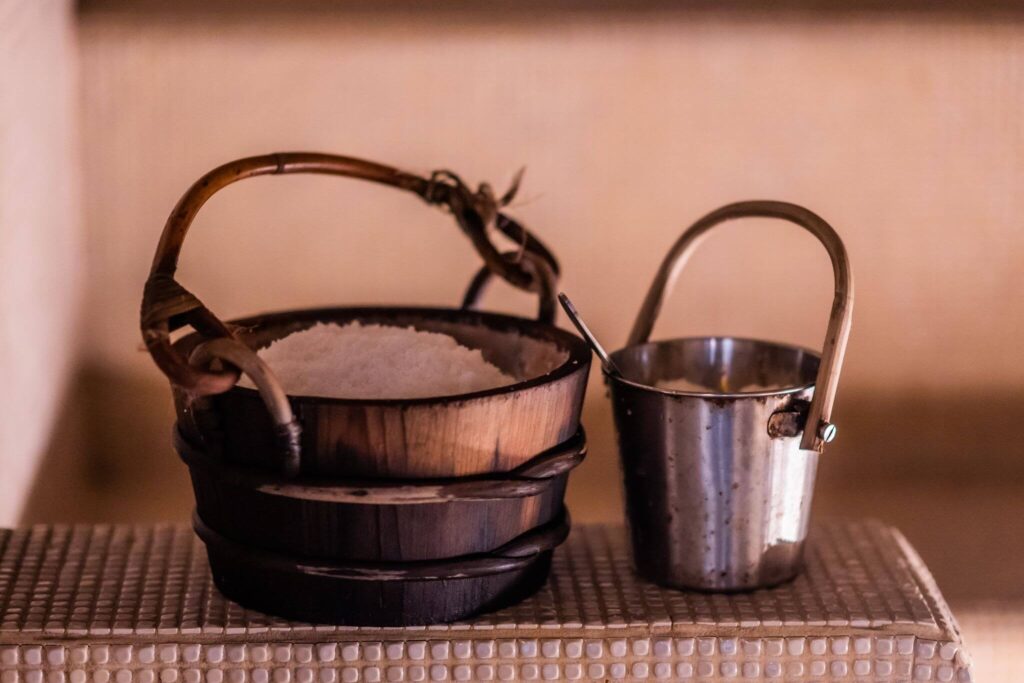
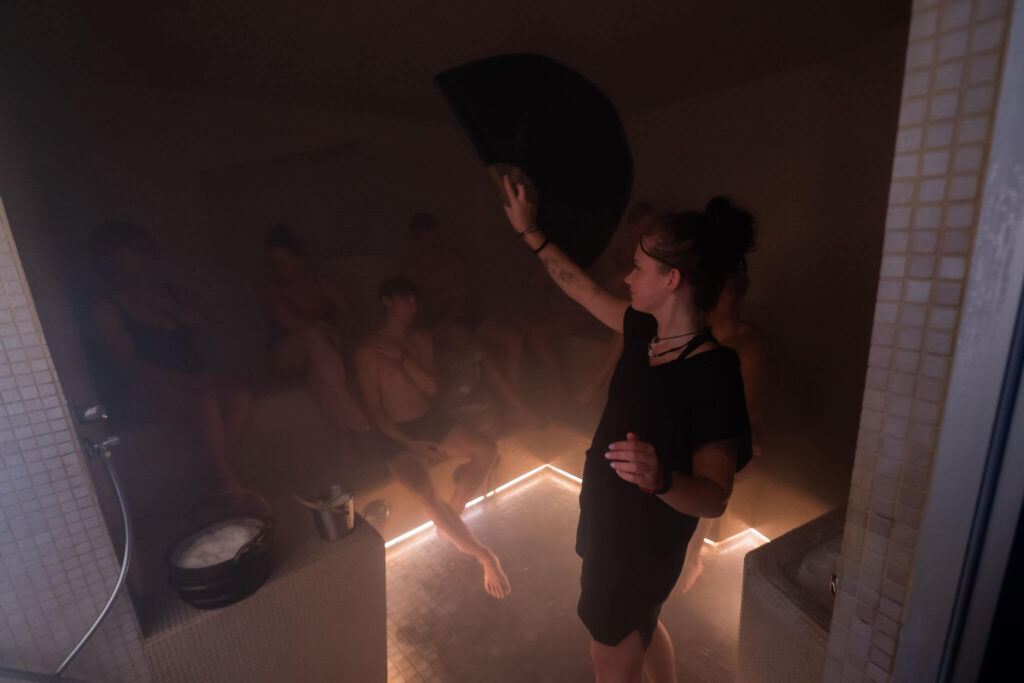
Karl-Peeter and Johanna’s working days consist of running sauna rituals. They spend some four hours a day in the sauna. “In the evenings you sleep very well!” Johanna praises her sauna days. To an ordinary person that much time spent in the sauna may be astonishing, but the masters explain that the saunas have different temperatures – the hottest steam ritual is done by one master twice a day, while the mud sauna is only 50 degrees.
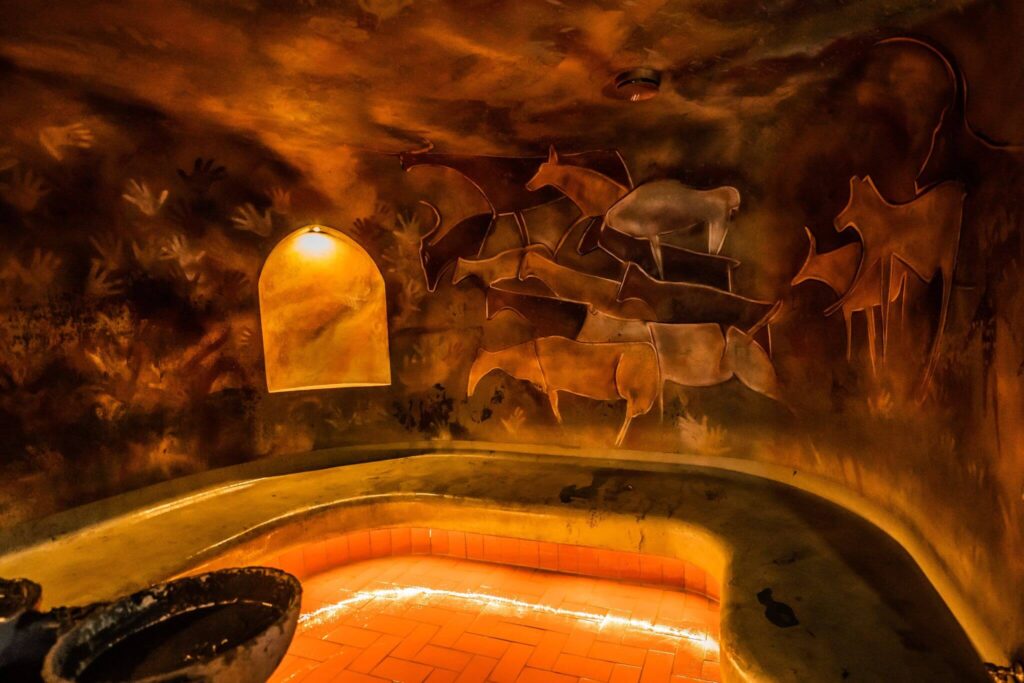
Karl-Peeter adds that working as a sauna master has had a very good effect on his health, and he has to think when he was last ill at all. Johanna too says that in the past she was sometimes ill several times a month in winter, whereas during her time working at the spa she has been ill only a couple of times.
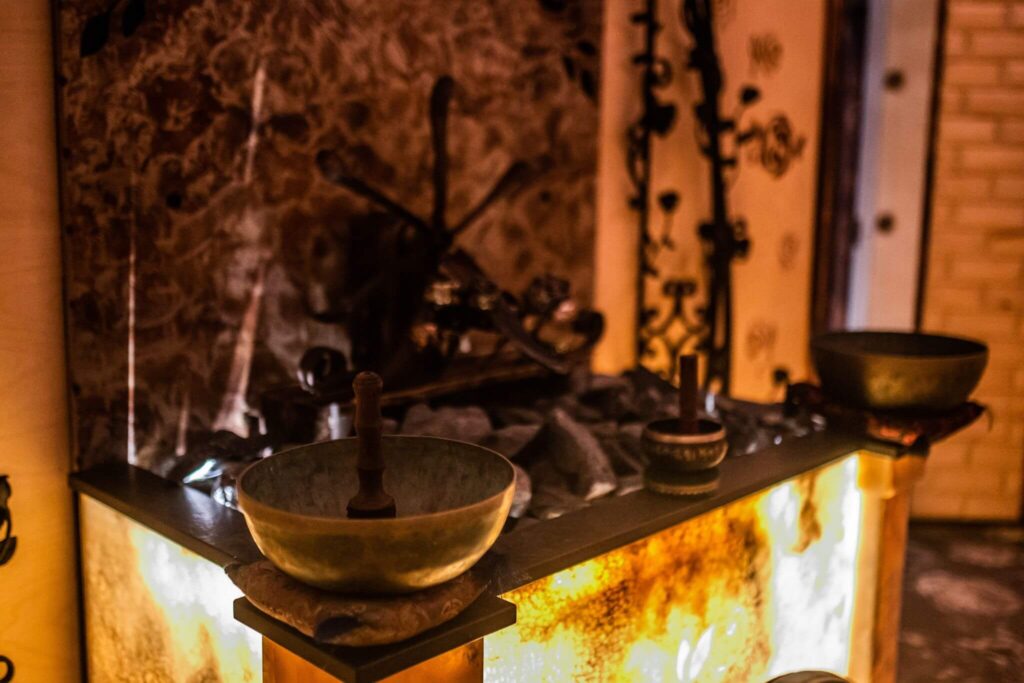
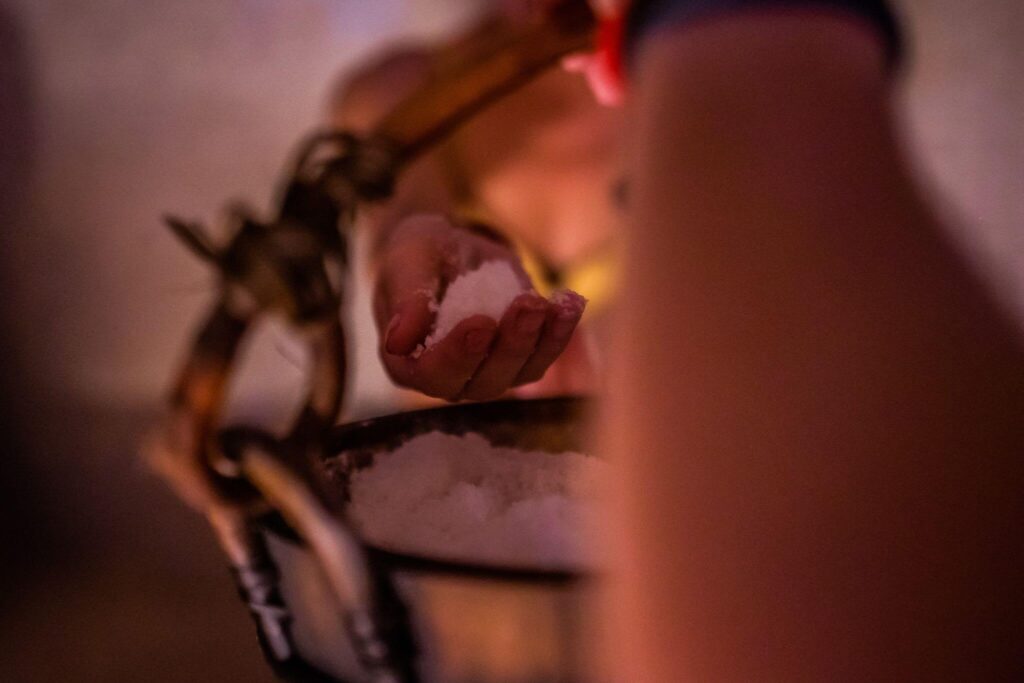
A sauna master’s work is not only sauna rituals; carrying sacks of salt and waving towels also count as a workout. Along with that, however, you have to eat properly and definitely drink enough water – preferably mineral water. Before the sauna you could also have light and healthy food. Johanna recommends a fruit platter, fresh salads or smoothies, for example. Karl-Peeter’s favourite is a beef kebab wrap, and among drinks he recommends drinking kvass after the sauna, which helps fill the stomach a little and brings energy back.
The towel is certainly one elementary element that goes with the sauna, be it for drying yourself or covering your body. Few people think, however, that towels can make the sauna much more alive and even more enjoyable. “The simplest thing is to make wind with a towel using different movements so that the hot air and the aroma reach all the bathers. The more experienced can also do tricks with a towel and control the intensity of the air movement,” Karl-Peeter instructs.
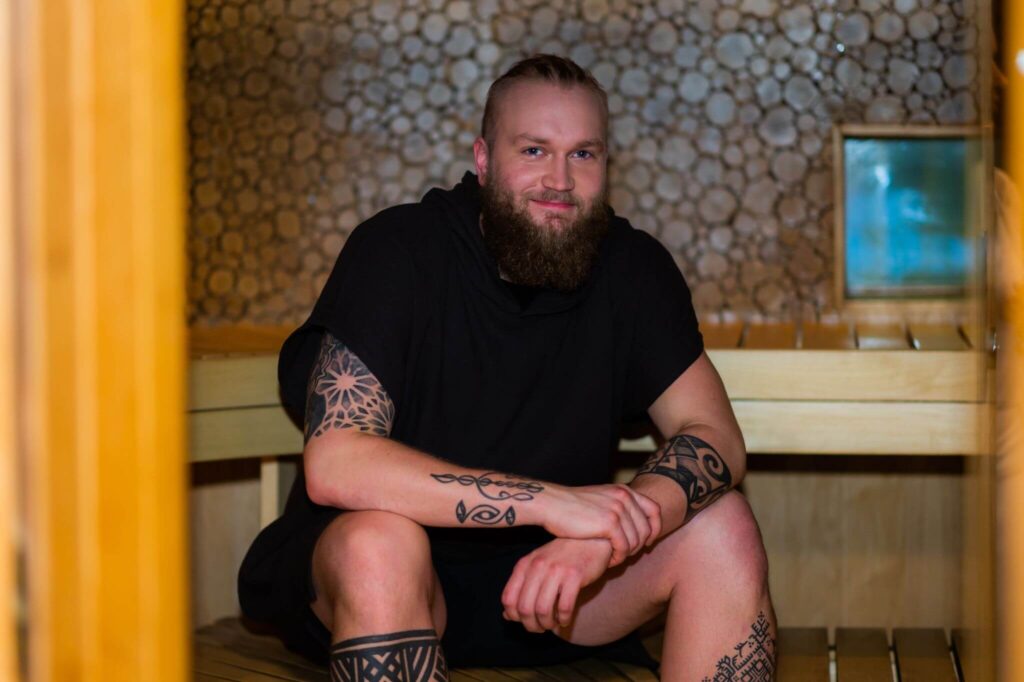
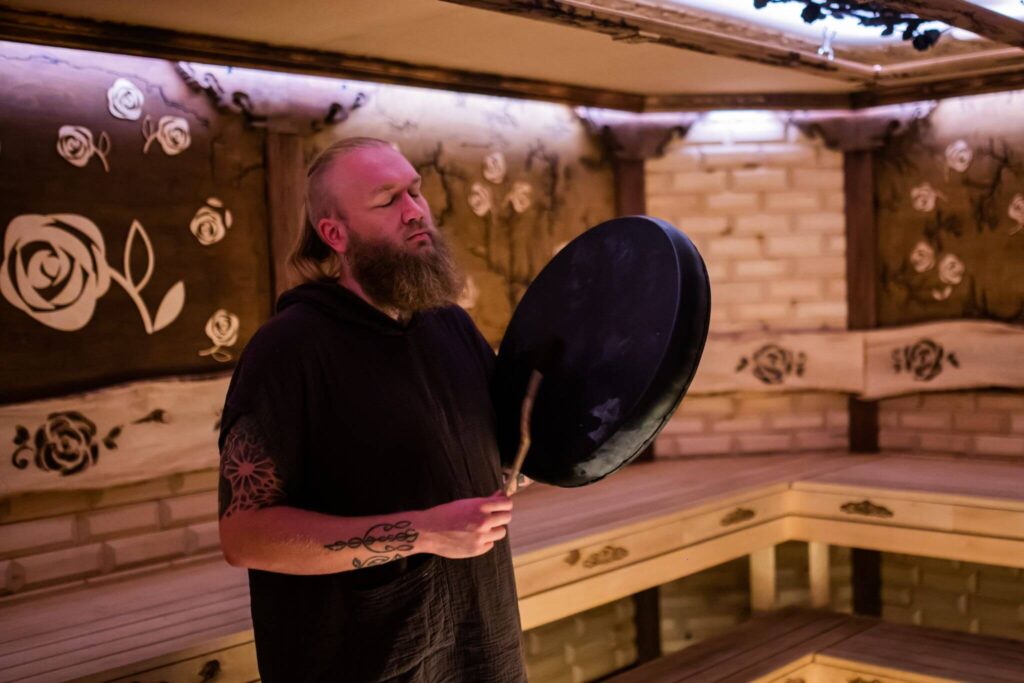
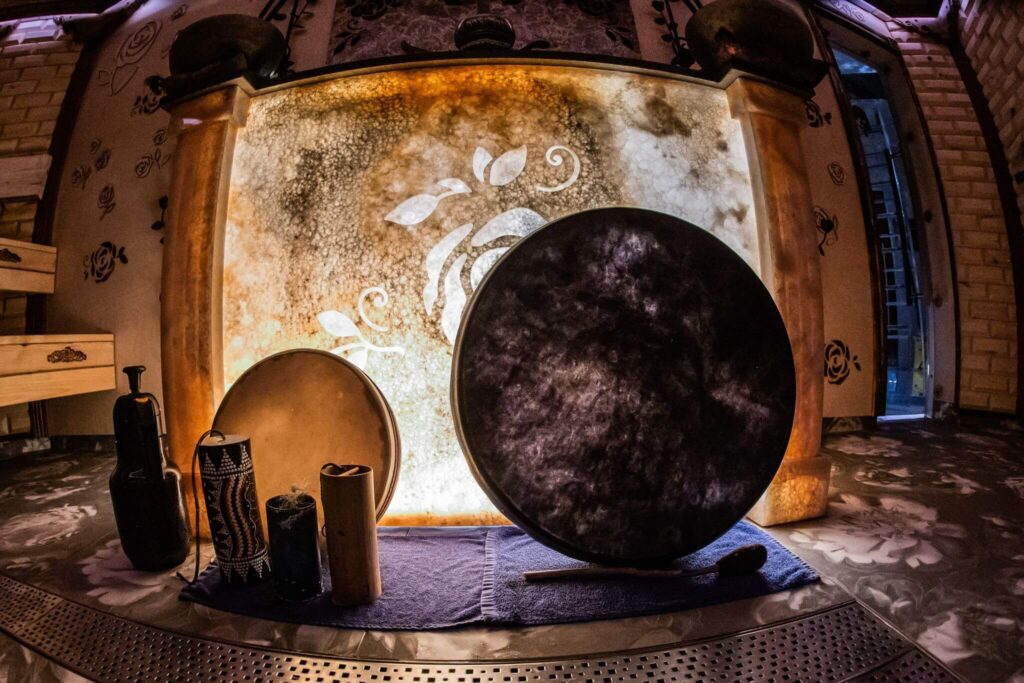
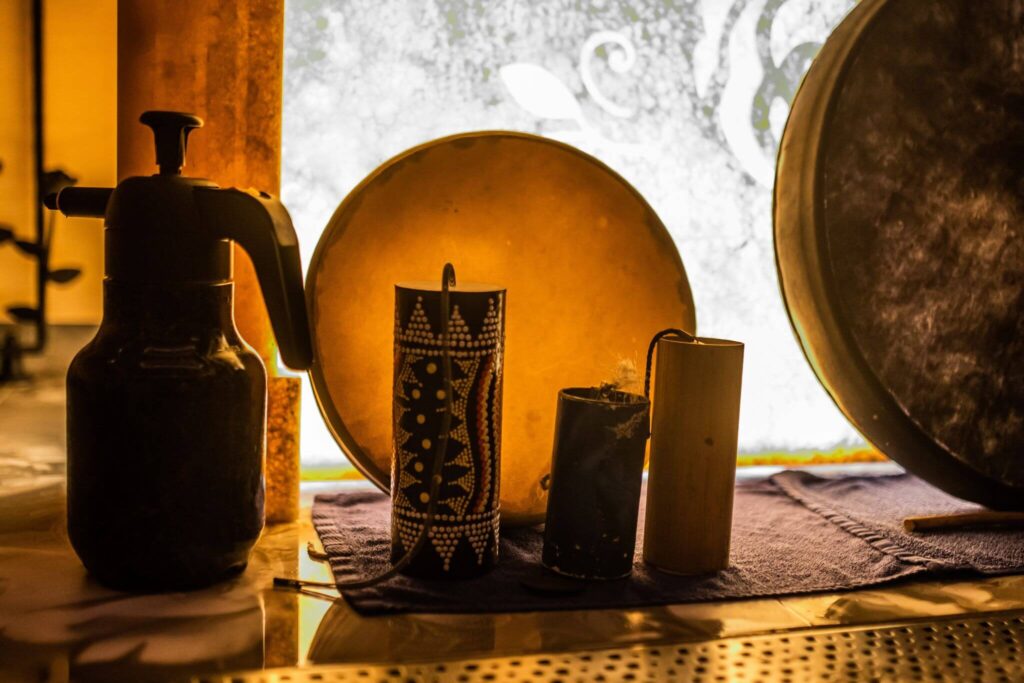
Secondly, musical instruments can be used for a sauna ritual. The sauna masters themselves use four main instruments in their rituals – Tibetan bowls, a drum, a wave instrument and Koshi chimes. The bowls suit calmer, meditative rituals very well: “With such rituals the mind can travel quite far. During a ritual lasting 10–12 minutes some people may even fall asleep, dream and start snoring,” Johanna smiles.
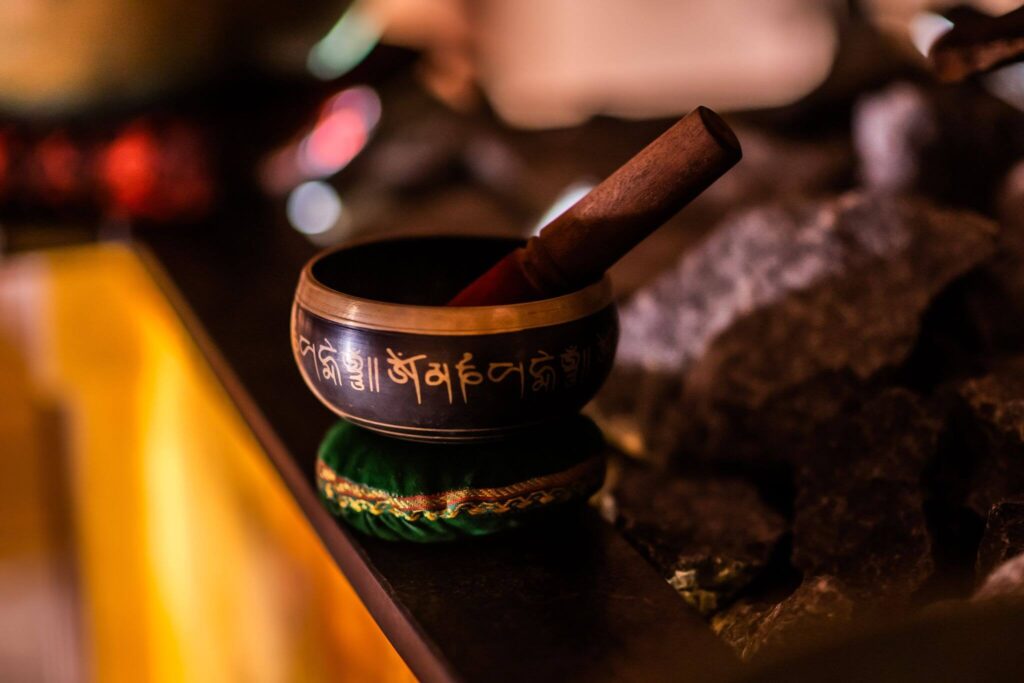
People’s favourites, according to the sauna masters, are the bowls, the drums and definitely the wave instrument. With the latter it is possible to create a very real feeling of being by the sea. “The wave instrument creates the atmosphere of the sea and customers have praised it a lot – said that it creates exactly the feeling of being by the sea and hearing the waves lapping,” Johanna describes. Koshi chimes, in turn, are available with little cushions that make it possible to use the instrument precisely in the heat.
Aufguss is a style of sauna ritual that originated in Germany, in which towels are used to move the air flow. Today an Aufguss association has also been created, uniting the world’s best sauna centres. It currently has 17 different countries – for example Japan, Canada and Italy. From Estonia, Elamus SPA is the only member of the Aufguss association. Elamus Spa is a new member of the Aufguss organisation, and as a result the sauna masters had the honour of presenting Estonia as a country with a strong sauna tradition, though not yet of competing officially. They will go to measure themselves against the world’s sauna masters in autumn 2024.
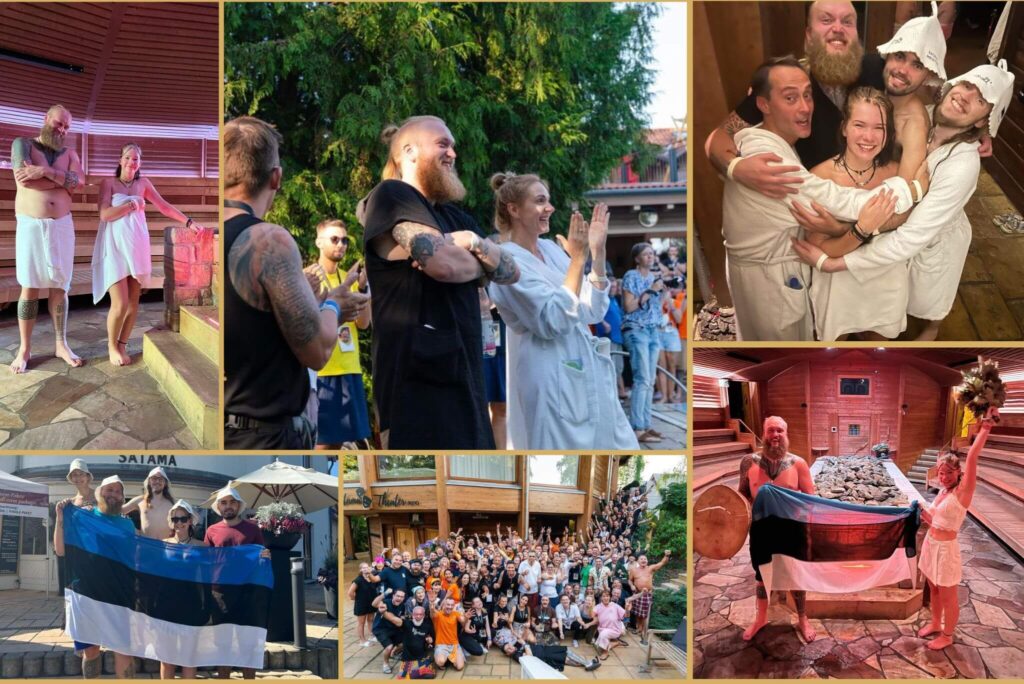
Estonian sauna masters Johanna and Karl-Peeter performed a 15-minute sauna show in Germany in an 85-degree theatre sauna that held 200 bathers.
They explain that the main part there was the moving of the air flow and the aromas with a towel, and the various towel techniques, towel throws and catches.
Although only Johanna and Karl-Peeter performed, behind the whole presentation there was in fact a large team.
Villiko Kruuse, the director of several TV productions, was involved, for example.
The preparations lasted, as in almost every theatre production, 3–4 months. At first they thought through what the sauna show could be about, then they began putting together the story, the music, the costumes, the props, the aromas, the lighting and the sound engineering. It was a big job, and in the last month they just kept polishing details and rehearsing.
Estonia does not yet have a sauna room large enough to perform an Aufguss show in, so it had to be rehearsed in the garage on Elamus Spa’s basement floor. From Euro pallets a stove 2 m wide and 5 m long was built, similar in dimensions to the stove at the German competition.
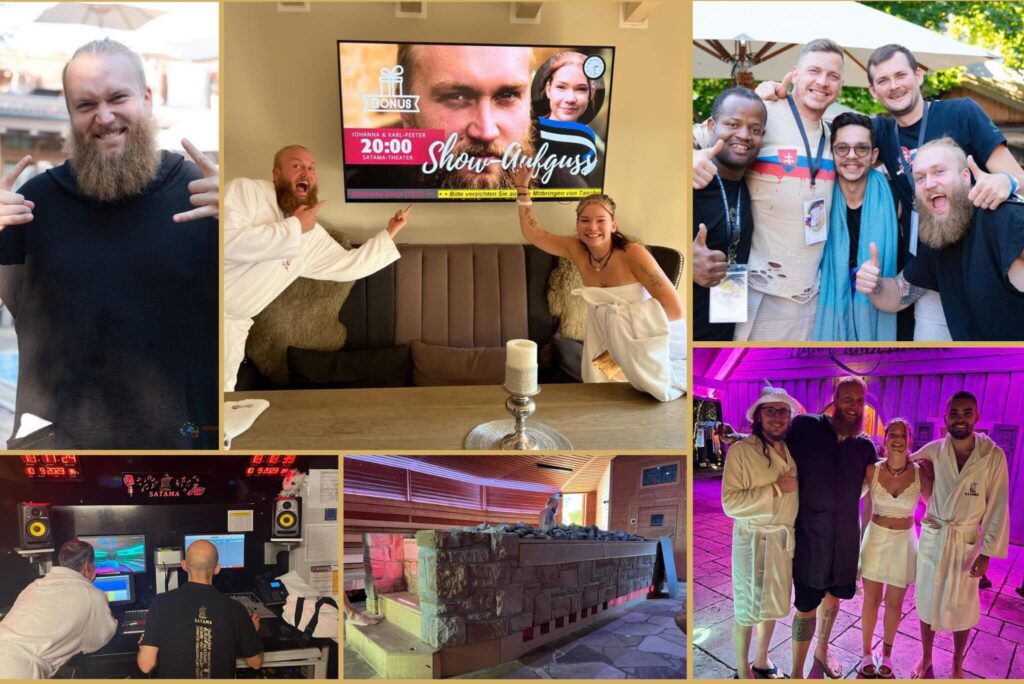
Since the sauna temperature is hot, rehearsals in a real sauna at 90 degrees also began in August. “We could not believe it would be so hard!” they admit. But on site the adrenaline was so high that it came out well and there was not a trace of tiredness. The work was big and intense, but the team confirms it was worth it.
Throwing steam and whisking belong to the sauna as always. Sauna whisks should be kept in water as hot as possible for 60 minutes before whisking. Hot water makes the leaves soft and brings out pleasant aromas. It is pleasant to use the whisk-soaking water on the stove; it creates a good aroma throughout the sauna room. Before whisking you should definitely put the whisks in a bucket of cold water, because that way the leaves last longer. It depends on the vigour of the whisking too, of course!
In the steam sauna it is worth making wind with a large fan or a towel, to get the most out of the steam sauna. The best thing would be to jump into cold water after the steam, but a cold shower or water thrown from a bucket also works well.
Sauna rituals take place every hour, helping to restore body and senses.
A well-guided sauna ritual can be an experience in which bathers find, alongside the usual sauna experience, peace of mind, deep relaxation…
Read more →
The pace of working life in today's changing world is faster than ever before, and leaders often have to make decisions within…
Read more →
For Elamus Spa the year 2025 has brought exceptional recognition – we have been awarded the title “Best Spa 2025” at the…
Read more →